
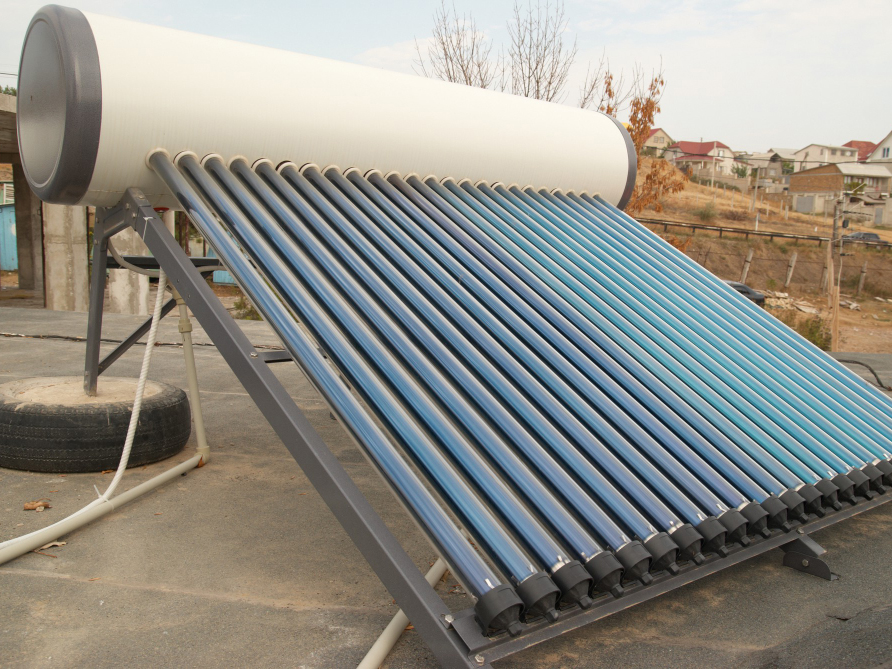
Solar Geysers
Solar geysers absorb light from the sun by means of solar panels to generate heat. A solar controller pumps hot water from the manifold on the roof into the geyser inside the roof when the temperature of the manifold is 7 degrees higher than the water temperature in the geyser, the solar controller will stop pumping when the temperature difference between the manifold and the geyser drops below 3 degrees and the process will then start again.
A solar geyser can save up to 90% of your water heating costs.
A solar geyser uses solar energy thus reducing your electricity bill
Less reliance on Eskom for hot water
Better for the environment
- Thermosyphon system with tubes
- Thermosyphon system with flat plate
- Retrofit or Split solar geyser
- Solar geyser with gas backup
TYPES OF WATER HEATING
Thermosyphon is a method of passive heat exchange, based on natural convection which circulates a fluid without the necessity of a mechanical pump. This naturally happens when a Solar geyser is above the flat plate or tubes.
HOW A THERMOSYPHON SYSTEM WITH TUBES WORKS
The system relies on the natural process of thermosyphon where heat rises from the tubes below into the geyser above, heating the water in the geyser.
BENEFITS
Less maintenance as there is no mechanical pump
Tubes are about 20 – 25 % more effective that flat plates
DISADVANTAGES
Can overheat if hot water is not used over and extended period of time
HOW A THERMOSYPHON SYSTEM WITH FLAT PLATE WORKS
The system relies on the natural process of thermosyphon where heat rises from the flat plate below into the geyser above, heating the water in the geyser.
BENEFITS
Less maintenance as there is no mechanical parts
Flat plates are generally more hail resistant
DISADVANTAGES
Can overheat if hot water is not used over an extended period of time
Not as effective as tubes
HOW THE SYSTEM WORKS
A solar controller pumps hot water from the manifold on the roof into the geyser inside the roof. When the manifold temeprature rises to 7 degrees higher than the water temperature in the geyser. The solar controller stops pumping when the temperature difference between the manifold and geyser becomes less than 3 degrees and the heating process starts again.
BENEFITS OF SPLIT SOLAR GEYSER SYSTEMS
You can convert your existing electric geyser into a solar geyser, drastically decreasing installation costs.
Flat plates are generally more hail resistant
All solar geysers should have some form of a back up heating system for rainy days.
BACK UP HEATING OPTIONS
An electric element utilizes electricity to heat your water when it is not hot enough.
A gas back up system will only heat the water you have used and pump it back into the geyser for your use.